


US Seeks to Complete Iran’s Land Blockade | Are Pakistan and Iraq Shifting Toward Trump?
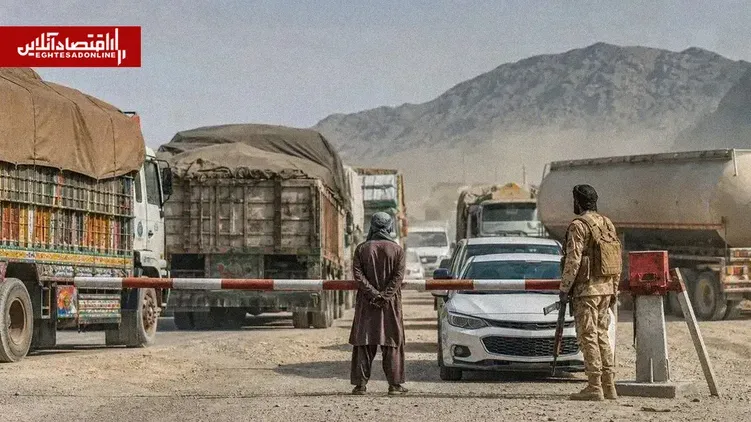
EghtesadOnline: The United States, with the cooperation of Iran’s neighbors Pakistan and Iraq, is moving to tighten a land blockade around Iran. Both countries have maintained close ties with the Islamic Republic, but are now increasingly restricting border crossings and trade routes with Iran.
Political Desk: From Pakistan to Iraq, restrictions on Iran’s land borders are intensifying. Until recently, Pakistan had cited technical problems to explain border closures. Now, however, its Foreign Ministry has dropped that justification, stating that Islamabad will comply with US sanctions against Iran. Iraq’s prime minister has announced a similar position more cautiously.
Iran is facing restrictions on its land routes at a time when a naval and air blockade had already begun. The closure of the al-Shaib border crossing with Iraq and trade restrictions at Pakistan’s Rimdan–Gabd and Mirjaveh–Taftan crossings are signs that Iran’s access to regional trade networks is becoming increasingly difficult. These routes have grown more important in recent months as Tehran has sought to compensate for disruptions to maritime trade.
Are Iran’s Neighbors Pulling Away?
The border closures come at a time when Iran had expected its neighbors to keep trade routes open, at least during a crisis. Nevertheless, it is too early to describe the situation as a complete land blockade of Iran. Not all borders have been closed, and neighboring governments have offered different explanations for their actions, ranging from technical and security concerns to compliance with sanctions.
What appears to be emerging is a gradual narrowing of Iran’s trade options and an increase in the cost of using the routes that remain available.
When Diplomatic Ambiguity Ends
Developments along the Pakistan border are significant because Islamabad has sought to play a mediating role between Tehran and Washington in recent months while maintaining relations with both sides. However, restrictions imposed at the Rimdan–Gabd and Mirjaveh–Taftan crossings have disrupted overland trade between the two countries.
In recent statements, Pakistan’s Foreign Ministry has said that the country will comply with all applicable sanctions regimes in accordance with international and domestic law.
The announcement came just four days after Pakistani Army Chief Asim Munir visited Iran, where he reportedly encountered Tehran’s rejection of a proposed mediation initiative. The developments suggest that Pakistan may ultimately be choosing to align itself more closely with Washington rather than Tehran.
However, the extent of the border closures remains unclear. A Pakistani journalist even claimed that the border crossing between Pakistan and Iran had eventually reopened in both directions after several days of closure. That account appears inconsistent with the Pakistani Foreign Ministry’s position.
According to Fadahossein Maleki, head of the Iran–Pakistan Parliamentary Friendship Group, Munir had ordered the border to reopen during his visit. However, the reported reopening was one-sided, with restrictions on crossings from Iran into Pakistan remaining in place.
This account highlights the continuing gap between diplomatic statements and conditions on the ground.
The restrictions have also come at a cost to Pakistan itself. Reuters reported that the suspension of liquefied petroleum gas (LPG) imports from Iran had exacerbated fuel shortages, pushing the price of a 12-kilogram LPG cylinder in Balochistan from approximately 4,500 to 7,000 Pakistani rupees.
Iraq Between US Pressure and Iranian Influence
On Iran’s western border, Baghdad’s decision to close the al-Shaib crossing opposite Iran’s Chazabeh crossing is another significant development. Located in Iraq’s Maysan province, the crossing is an important route for passenger traffic and the movement of goods between the two countries.
Iraqi officials have attributed the closure to a review of security arrangements and the installation of detection equipment intended to combat smuggling. This explanation resembles the one Pakistan had offered only days earlier.
Meanwhile, Agence France-Presse, citing two Iraqi political sources, reported that the United States was pressuring Baghdad to close additional border crossings between Iraq and Iran.
Baghdad faces a complex dilemma. The Iraqi government needs to preserve its economic ties with Iran while also preventing the country from becoming a battleground between Tehran and Washington.
The presence of Iran-aligned Shiite armed groups further complicates the equation. The Iraqi government has repeatedly emphasized that weapons should remain exclusively under the control of official institutions, but implementing this policy has encountered political and security obstacles. Concerns that these groups could intervene in a future conflict are among the factors shaping Baghdad’s security calculations.
Iraqi Prime Minister Ali al-Zaidi has also adopted a cautious tone in an apparent effort to avoid provoking these groups. He has argued that closing the two countries’ borders would amount to imposing an economic blockade on Iraq itself.
Al-Zaidi has emphasized that Baghdad does not want to become involved in a regional war and that the crisis should be resolved through an agreement.
His position exposes a central contradiction: Iraq wants to preserve its independence in decision-making, but it may also be compelled to balance its interests and cooperate with the United States to limit the economic and security consequences of external pressure.
Remaining Routes Under Pressure
Turkey remains one of Iran’s most important overland trade routes. Unlike Pakistan and Iraq, however, available reports do not indicate that Turkey has completely closed its commercial borders with Iran.
Nevertheless, US Treasury Secretary Scott Bessent has said that Washington is working with Turkey and Pakistan to cut off Iran’s land routes. Ankara has not publicly committed to closing all overland routes into or out of Iran. Washington’s stated cooperation with Turkey should therefore not be equated with the implementation of a complete land blockade.
Azerbaijan is also strategically significant for Iran because of its close relationship with Israel and its security cooperation with the country. However, the article suggests that Baku may align itself with US and Israeli policies toward Iran.
From Truck Queues to Household Budgets
The immediate effects of border restrictions are higher transportation costs and longer delivery times.
According to information published through mid-September, approximately 17,000 trucks were waiting to cross Iran’s borders with Turkey, Afghanistan and Azerbaijan, with delays sometimes reaching 20 days.
Reports have also described agricultural shipments spoiling during transit and more than 4,500 metric tons of LPG stranded on the Iranian side of the Pakistan border.
Amid a naval blockade, such disruptions could push up the prices of food, industrial raw materials and imported goods. Another consequence could be lower export revenues and increased pressure on businesses that depend on regional trade to obtain inputs or sell their products.
The ultimate impact, however, will depend on the scope and duration of the restrictions. Keeping other crossings open, using rail routes and expanding trade with northern neighbors could ease some of the pressure. But replacing heavily used, relatively inexpensive routes with more limited, slower and costlier alternatives will not be easy.
Will the Blockade Be Completed or Broken?
Washington’s strategy, as described by US officials, is to sustain and expand pressure beyond oil exports and the financial system to encompass transportation routes and regional trade networks. If this trend continues, the restrictions surrounding Iran could become increasingly severe.
Iran’s neighbors, however, face no easy choice. Restricting trade with Iran may help improve their relations with Washington, but the costs could be passed on to their own consumers, traders and border communities.
The Iraqi prime minister’s warning and the increase in LPG prices in Pakistan illustrate these potential spillover effects.
According to Eghtesadonline, although Iran’s land blockade is not yet complete, the combination of US naval pressure and new restrictions along the country’s eastern and western borders suggests that Tehran’s economic room for maneuver is shrinking.
The decisive question is whether Iran can contain the pressure through regional agreements and alternative trade routes—or whether military escalation and further restrictions will ultimately complete the encirclement of Iran.